Blog
Home
Test
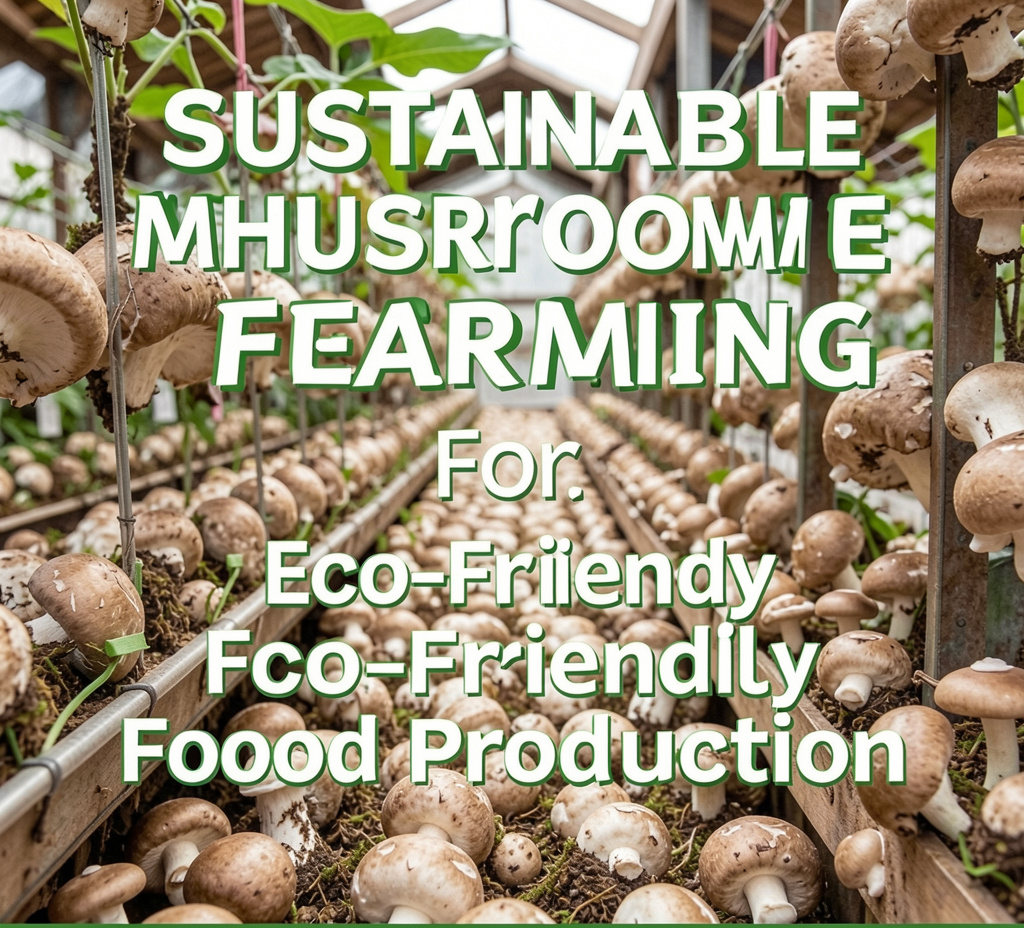
Sustainable Mushroom Farming: The Eco-Friendly Future of Food Production
The future of food is not just about producing more. It is about producing better. As more people become aware of climate concerns, agricultural waste, food miles, and chemical-heavy farming systems, they are starting to look for alternatives that feel smarter, cleaner, and more responsible. That is exactly where Sustainable Mushroom Farming enters the conversation. Mushrooms are no longer seen as a niche gourmet ingredient or a specialty health food. They are becoming part of a larger movement toward efficient, eco-conscious agriculture that uses fewer resources while still delivering nutrition, freshness, and flavour to the table.
This blog explores how sustainable mushroom cultivation is helping reshape modern food production through lower-impact methods, circular growing systems, and cleaner farm-to-table practices. You will learn why mushroom farming is attracting attention from sustainability-minded buyers, chefs, and food producers, and how it compares favourably with many traditional agricultural models. We will also look at how FarmSmart supports this movement through pesticide-free growing, environmental control systems, and premium gourmet mushroom production that aligns with today’s demand for freshness and responsible sourcing. Ready to explore the future of better food? Let’s get into it.
What You Should Know Before Understanding Sustainable Mushroom Farming
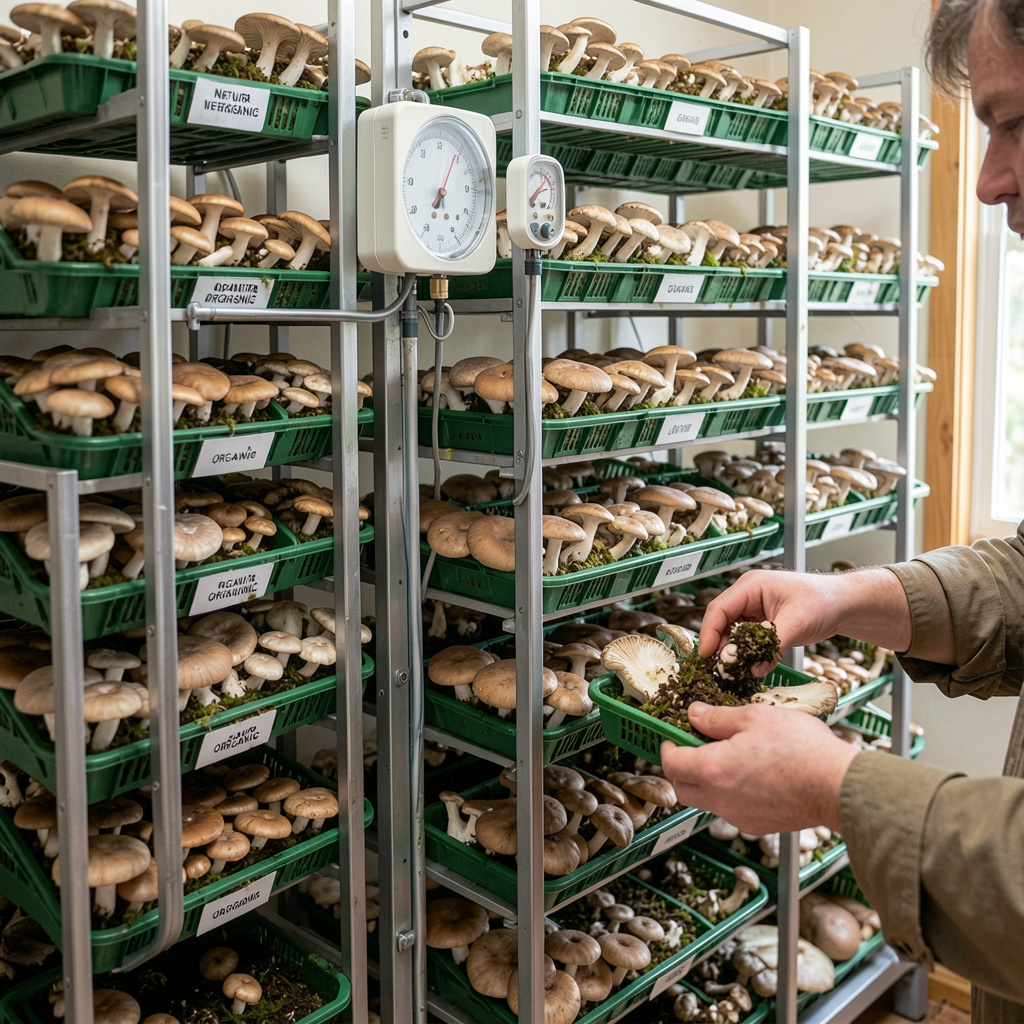
Before looking at the benefits of mushroom cultivation, it helps to understand why mushrooms occupy such a unique space in agriculture. Unlike many crops that depend on large tracts of land, heavy irrigation, seasonal planting cycles, or direct sunlight, mushrooms thrive in highly controlled environments. This gives growers the ability to reduce waste, maintain consistency, and create reliable harvests in a much smaller footprint. It also means mushrooms can be grown close to urban and suburban communities, making them an attractive option for local food systems and premium culinary markets.
What makes sustainable mushroom farming especially compelling is not just the product itself, but the system behind it. Mushrooms are often cultivated using agricultural byproducts, carefully managed humidity, clean indoor production spaces, and reusable or compostable materials. These qualities make them naturally aligned with sustainable agriculture, regenerative food conversations, and circular economy thinking. Once you understand how these systems work together, it becomes much easier to see why mushrooms are increasingly viewed as one of the most practical eco-friendly food production models available today.
Improving Waste Management in Agriculture
One of the strongest environmental advantages of mushroom farming is its ability to transform agricultural byproducts into productive growing material. In many sustainable mushroom systems, growers use substrates made from materials such as straw, sawdust, husks, or similar organic leftovers that would otherwise be discarded, burned, or treated as low-value waste. Instead of allowing these resources to go unused, mushroom cultivation gives them a second life by turning them into a medium for producing fresh, nutrient-dense food. This is one of the clearest examples of waste reduction with real agricultural value.
From a sustainability perspective, this matters because waste management is one of the biggest hidden challenges in modern farming. When byproducts are reused efficiently, farms reduce disposal pressure and make better use of the resources already circulating through the food system. That creates a more efficient production model overall. For readers interested in cleaner agriculture, this is not just a technical benefit—it is a meaningful shift away from extractive farming and toward smarter resource use. Sustainable mushroom farming works because it sees potential in what other systems might overlook.
Lowering Carbon Footprint in Food Production
When people think about environmentally responsible food, carbon footprint often becomes one of the most important factors. Mushrooms are increasingly recognized as a low-impact food because they can be grown in compact, efficient spaces with far less land disruption than many conventional crops or animal-based food systems. They do not require plowing, large-scale field management, or expansive outdoor production areas to be successful. That makes them particularly attractive for growers and buyers who want high-quality food with a smaller environmental burden.
The lower carbon impact of mushroom farming also comes from the way the crop fits into modern localized food production. Mushrooms can be cultivated closer to the end consumer, which reduces long-distance transportation, handling, and storage demands. This creates a more efficient path from grow room to plate. For sustainability-conscious households, restaurants, and food businesses, that kind of efficiency matters. It proves that food production does not always have to be large, wasteful, or heavily industrial to be successful. Sometimes the smarter system is also the more environmentally responsible one.
Encouraging Soil-Friendly and Regenerative Practices
Although mushrooms are often grown indoors rather than directly in field soil, they still contribute meaningfully to soil-friendly and regenerative agricultural thinking. One of the reasons is what happens after the harvest. In many sustainable systems, spent mushroom substrate can still be used in composting or soil-supportive applications rather than being discarded immediately. That means the growing medium often continues to deliver value after the mushrooms themselves are harvested, supporting a broader cycle of organic matter reuse and agricultural recovery.
This is important because regenerative food systems are not only about what is grown, but how materials are circulated after production. Soil health improves when organic materials are reused intelligently rather than sent to waste streams. Sustainable mushroom farming supports that philosophy by participating in a cycle of input, growth, and reuse that mirrors natural ecological systems more closely than conventional linear production models. For readers who care about long-term land health, this is one of the strongest reasons mushrooms deserve a bigger role in future-focused agriculture.
Why Controlled Cultivation Supports Sustainability
Controlled cultivation is one of the biggest reasons mushroom farming can be so efficient. By carefully managing temperature, humidity, airflow, and sanitation, growers can reduce losses caused by contamination, weather instability, and unpredictable outdoor conditions. This kind of precision helps prevent crop failure and supports consistent harvest quality. In sustainability terms, that is important because wasted crops represent wasted energy, wasted labour, and wasted materials. Better control often leads to better environmental outcomes.
FarmSmart emphasizes controlled cultivation and environmental management as part of its growing approach, which aligns naturally with sustainable production goals. A stable indoor system allows for year-round growing and helps maintain the freshness, appearance, and quality that gourmet mushroom buyers expect. It also supports more efficient use of resources by minimizing the guesswork and variability that can come with less controlled agricultural methods. When sustainability and consistency work together, both the farm and the customer benefit.
The Importance of Local, Fresh Food Systems
Sustainable food production is not only about how food is grown. It is also about how far it travels, how it is handled, and how quickly it reaches the consumer. Mushrooms are highly perishable, which makes them particularly well suited to local and regional supply systems. When they are grown closer to the people buying and cooking them, they can be delivered fresher, with less handling, less spoilage risk, and fewer transport-related emissions. That is a practical environmental advantage that directly improves food quality as well.
FarmSmart’s farm-to-table positioning reflects this strength clearly. Fresh gourmet mushrooms that move through a shorter supply chain are not only better for the environment, they are also better for the plate. Local freshness can improve texture, flavour, shelf life, and overall culinary value. For chefs, home cooks, and health-focused shoppers, that creates a compelling reason to support responsible local growers. Sustainable mushroom farming becomes even more meaningful when it is connected to a food system that values freshness and proximity, not just output.
Why Sustainable Mushroom Farming Is the Future of Food Production
Sustainability becomes truly valuable when it is practical, scalable, and relevant to the way people actually eat. That is exactly why mushroom cultivation is being taken more seriously as part of the future of food. Mushrooms offer a rare combination of resource efficiency, premium culinary value, and production flexibility. They can be grown year-round, in compact spaces, using repurposed materials and clean cultivation methods that align with modern sustainability goals. That makes them more than just a healthy ingredient—they represent a smarter agricultural model.
The future of food production will increasingly depend on systems that can reduce environmental strain while still delivering consistent quality and consumer appeal. Sustainable mushroom farming fits that need well because it offers benefits across multiple levels: waste reduction, lower emissions, efficient land use, cleaner production environments, and compatibility with local food systems. The following sections explore the most important reasons this model is becoming such a compelling part of agriculture’s next chapter.
Turning Agricultural Byproducts into Premium Food
One of the most important reasons sustainable mushroom farming stands out is its ability to convert low-value agricultural byproducts into high-value gourmet food. Instead of depending entirely on new raw inputs, mushroom growers often build their production systems around reused organic materials that would otherwise have limited utility. This creates a strong sustainability advantage because the system begins with recovery rather than extraction. It is a practical example of circular agriculture in action.
This matters to modern consumers because sustainability is no longer only about labels or packaging. People increasingly want to know whether a product was grown intelligently from the beginning. Mushrooms offer a powerful answer to that question because the production system itself is inherently efficient when done well. A food crop that can transform leftovers into something fresh, flavourful, and nutritious is not just eco-friendly in theory—it is eco-friendly by design. That is a major reason mushrooms are gaining credibility as part of the future food economy.
Why Resource Recovery Matters in Modern Agriculture
Modern food systems create enormous amounts of side material, much of which goes underused or mismanaged. Resource recovery is the practice of redirecting those materials into useful applications rather than letting them become waste. Mushroom farming excels here because fungi are biologically well suited to breaking down and growing on organic matter that many crops cannot use in the same way. This creates a natural partnership between sustainability and productivity.
For agriculture to become more resilient in the long term, more systems will need to operate like this—using what is already available rather than constantly drawing new resources from the environment. Sustainable mushroom farming shows that this is not only possible, but commercially valuable. It demonstrates how better resource use can produce premium food products while reducing unnecessary environmental pressure. That kind of efficiency is exactly what future food systems need more of, not less.
Using Less Space Without Sacrificing Output
Land use is one of the biggest environmental challenges in food production. Many traditional farming systems require extensive acreage, seasonal management, and long-term soil occupation to remain productive. Mushrooms offer a very different model. Because they are commonly grown in controlled indoor spaces, they can be cultivated vertically, stacked efficiently, and managed in much smaller physical footprints. This allows growers to produce a meaningful amount of food without requiring large-scale land conversion.
This is especially important in a world where agricultural land pressure, urban growth, and environmental conservation increasingly compete for space. A food production system that can generate premium ingredients in compact environments offers clear long-term value. For local growers and environmentally conscious food businesses, this also creates flexibility. Mushroom farming can fit into urban agriculture, warehouse-style growing systems, and modern farm designs in ways that many conventional crops simply cannot.
How Small-Footprint Farming Supports the Future
Smaller-footprint farming is not just about saving space. It is about creating more adaptable, resilient, and efficient food systems that can operate closer to population centres and respond more effectively to changing environmental conditions. Mushrooms fit this model extremely well because they are less dependent on open-field growing conditions and more compatible with controlled, repeatable production systems. That makes them especially relevant for the future of local and regional food supply.
As climate unpredictability and land constraints continue to challenge traditional agriculture, food systems will need crops that can be produced more flexibly and reliably. Sustainable mushroom farming provides a strong example of what that future could look like. It is compact without being limited, productive without being wasteful, and efficient without sacrificing freshness or culinary value. That is why mushrooms are increasingly being seen as more than just a specialty food—they are becoming part of a smarter agricultural blueprint.
Reducing Chemical Dependency in Food Production
Another major strength of sustainable mushroom farming is its potential to reduce dependency on broad agricultural chemical use. Mushrooms are often cultivated in highly managed indoor environments where cleanliness, substrate quality, and environmental control are more important than conventional field-based pesticide routines. This changes the growing process in a meaningful way. Instead of relying on reactive chemical interventions, farms can focus on prevention, sanitation, and stable conditions that support healthier crop outcomes from the start.
FarmSmart highlights pesticide- and disease-free production as part of its approach, which is especially relevant for readers looking for cleaner, more responsible food options. This kind of system appeals to customers who want premium ingredients grown with care and attention rather than industrial shortcuts. From a sustainability perspective, reduced chemical dependency also supports safer production conditions and lowers the risk of unnecessary environmental contamination. That makes mushrooms a compelling example of how food can be grown more responsibly without sacrificing quality.
Why Clean Cultivation Builds Consumer Trust
Food buyers today are paying more attention to how products are grown, not just how they look on the shelf. Clean cultivation practices help build trust because they give customers more confidence in what they are bringing into their kitchens. When a farm can explain its production process clearly and demonstrate careful handling, controlled growing, and low-input methods, it creates a stronger connection between product quality and production ethics.
This matters especially in premium food categories like gourmet mushrooms, where freshness, appearance, and brand credibility all influence buying decisions. Sustainable mushroom farming earns trust not by making vague environmental claims, but by operating in a way that visibly supports cleaner, more thoughtful food production. In a market where transparency increasingly matters, that kind of trust becomes a major competitive advantage for responsible growers.
Supporting Local Food Security and Year-Round Supply
One of the most exciting things about mushroom farming is its ability to support local food systems throughout the year. Because mushrooms are often grown indoors under controlled conditions, they are not tied to the same seasonal limitations that affect many outdoor crops. This creates a more stable and predictable production cycle, which can be especially valuable for communities, restaurants, retailers, and households that want consistent access to fresh local ingredients.
Year-round local production also supports broader food resilience. It reduces dependence on distant supply chains and helps regional producers serve nearby markets more efficiently. In uncertain times, that kind of flexibility matters. Sustainable mushroom farming offers a practical example of how food production can become more local, more responsive, and less vulnerable to disruption. It is not only environmentally smart—it is strategically valuable for the future of food distribution as well.
Why Reliable Local Production Matters More Than Ever
Food systems are under growing pressure from climate variability, transport disruptions, labour shortages, and shifting consumer expectations. In that environment, local production is no longer just a lifestyle preference—it is becoming a resilience strategy. Crops that can be produced close to home, with fewer external dependencies, are likely to play a larger role in the future of food. Mushrooms fit this need remarkably well because they are efficient, adaptable, and fast to market.
Reliable local mushroom production also strengthens the relationship between growers and consumers. It creates opportunities for fresher products, better communication, and more direct support for regional food businesses. For sustainability-minded buyers, that is a powerful combination. It turns everyday food purchases into a way of supporting a more resilient and responsible agricultural system without compromising on taste or quality.
Why Choose FarmSmart for Sustainable Mushroom Farming?
If you are looking for a brand that aligns gourmet quality with modern sustainable growing values, FarmSmart is well positioned to stand out. The company emphasizes hand-picked freshness, farm-to-table delivery, environmental control systems, and pesticide-free production—qualities that naturally align with the core principles of sustainable mushroom farming. Its range of gourmet mushrooms, including varieties such as Blue Oyster, Pink Oyster, Chestnut, Lion’s Mane, Yellow Oyster, and Black Pearl Oyster, also gives buyers access to more flavourful and versatile options than standard supermarket offerings.
What makes FarmSmart especially relevant for this topic is how its cultivation model reflects the values consumers increasingly care about: freshness, controlled quality, local-style supply, and more thoughtful food production. Whether someone is exploring mushrooms for their nutritional value, culinary creativity, or environmental appeal, FarmSmart offers a practical and premium entry point. You can also naturally interlink this blog to pages such as Home, About, Blog, Contact, or individual mushroom variety pages to strengthen SEO and guide users toward product discovery and conversion.
Conclusion
Sustainable mushroom farming is more than a promising trend. It is a realistic and scalable model for how food production can become cleaner, smarter, and more aligned with environmental priorities. From reducing agricultural waste and lowering carbon footprint to supporting regenerative thinking, clean cultivation, and local supply systems, mushrooms offer a powerful example of what eco-friendly food production can look like in practice. They prove that sustainability does not have to mean compromise—it can also mean freshness, flavour, consistency, and real value for consumers.
As the food industry continues to evolve, systems that prioritize efficiency, low-impact production, and responsible sourcing will only become more important. That is why sustainable mushroom farming deserves attention not just from growers and food brands, but from everyday buyers who want their food choices to reflect better values. And for those looking to make that shift with confidence, FarmSmart offers a strong example of how premium mushrooms and responsible growing can work together to shape the future of food.
Recent Posts
-
 How Sustainable Mushroom Farming is Shaping the Future of Food
 -
 How Local Mushroom Growers Are Changing Fresh Organic Produce in Canada
 -
 Why Local Mushroom Growers Focus on Sustainable Mushroom Farming
 -
 Sustainable Mushroom Farming for Eco-Friendly Food Production
 -
 Eco-Friendly Mushroom Growing Practices That Make a Real Difference